What light, heat and air do to a fragrance
A perfume is typically a blend of water, alcohol and fragrance oils, and it is the fragrance portion that reacts most readily to its surroundings. The molecules that create a scent are complex organic compounds, and they can be altered by ultraviolet light, warmth and oxygen. That is why the same bottle can smell one way when it is new and noticeably different after months in a sunny spot or a steamy room.
Light is one of the most damaging influences. Direct sunlight and UV exposure can break down fragrance molecules, changing both the smell and the colour of the liquid. Many fragrances darken or yellow over time, and that colour shift usually accompanies a change in scent. Heat works alongside light. Warmer temperatures speed up chemical reactions, and large swings between hot and cold are especially rough on a formula. One commonly cited rule of thumb, based on the Arrhenius equation, is that perfume degrades roughly twice as fast for every 18°F (10°C) increase in temperature. That is a scientific approximation rather than a measured guarantee for any specific bottle, but it helps explain why a warm shelf is worse than a cool cupboard.
Air exposure is the third major factor. Oxygen causes oxidation, which tends to dull top notes first, then weaken the overall scent and shorten the perfume's useful life. In practice, this means that how you handle the bottle matters as much as where you put it. Shaking a bottle introduces oxygen into the liquid and speeds oxidation, so it should be avoided. Sealing the cap tightly and storing the bottle upright limits air contact and also reduces the chance of leaks.
- Light and UV can break down fragrance molecules and shift both scent and colour.
- Heat and temperature swings accelerate degradation; a rough rule of thumb is double the rate for every 18°F (10°C) rise.
- Oxygen causes oxidation, which dulls top notes and weakens the overall scent over time.
- Shaking a bottle introduces oxygen, so handle bottles gently and keep caps tightly closed.
Sources: PERFAME, CLEAN Beauty Collective, Goldfield & Banks, Ammar's Fragrances, CRA-YON, Shay & Blue USA
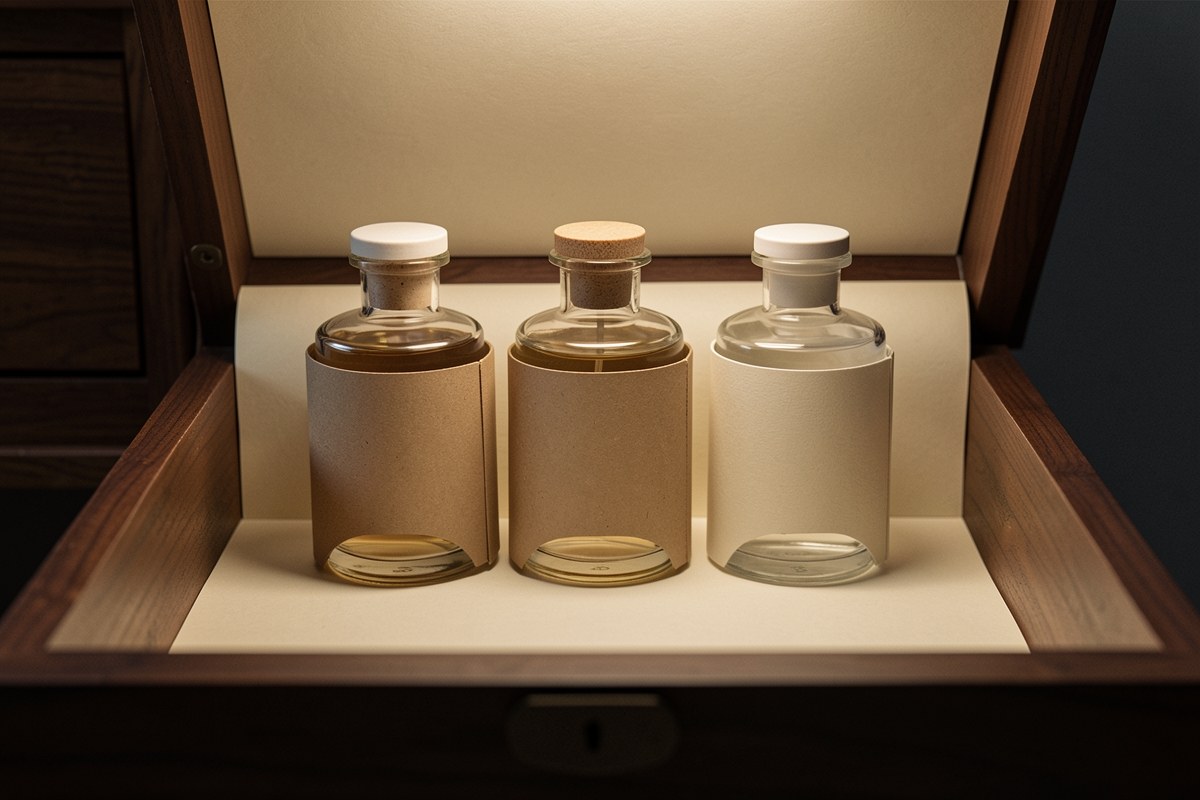
Everyday storage mistakes
Many storage problems come from small habits rather than dramatic accidents. Leaving bottles on a windowsill, a sunny dresser or a shelf above a radiator exposes them to constant light and warmth. Keeping them in the bathroom seems convenient but puts them in one of the most humid rooms in a home. High humidity, especially during hot showers, can trigger reactions that damage fragrance molecules, and the repeated temperature shifts add stress.
Cars are another trouble spot. A glove compartment or a cup holder can reach extreme temperatures on a sunny day, and the combination of heat and vibration speeds evaporation and oxidation while putting pressure on the bottle itself. Even a short errand can expose a fragrance to higher temperatures than it would face in a normal room.
Handling also matters. Some people shake a bottle before spraying to mix it, but that introduces air and accelerates oxidation. Others leave caps loose or store bottles on their sides, which increases the chance of leaks and air exchange. A few simple adjustments, such as moving bottles out of direct light and keeping caps tight, remove most of the everyday risk.
- Avoid windowsills, sunny shelves and spots near radiators or heating vents.
- Do not store bottles in a car, especially in a glove compartment or on a sunny day.
- Skip shaking the bottle before use; it introduces oxygen.
- Keep caps tightly closed and store bottles upright to reduce air exposure and leaks.
Sources: PERFAME, CLEAN Beauty Collective, Zermat USA, CRA-YON
Storing bottles in a bathroom versus a closet
The bathroom is a common place to keep perfume, but it is also the location most sources advise against. The heat and humidity from showers fluctuate repeatedly, and that cycle can degrade a fragrance faster than a stable environment would. One retailer source suggests that a bottle kept in a bathroom could decline in as little as three to six months, though that figure should be treated as an illustrative estimate rather than a measured standard. The core point is that bathrooms combine moisture with temperature swings, and both work against the fragrance.
A closet or a closed cabinet in a cool room is generally a better choice. It stays dark, has more stable temperatures and keeps bottles away from humidity. If the closet is in a bedroom or hallway, it also avoids the daily steam that a bathroom receives. For extra protection, keep bottles in their original boxes or in a dark, opaque container; that blocks light even if the closet is opened often.
There is no single perfect temperature that applies to every fragrance, but sources often cite a range. One common guideline is 55–70°F (12–21°C), while some sources recommend a narrower cool band. These are guidance ranges, not official standards, but they all point in the same direction: cool, dark and steady is better than warm, bright and fluctuating.
- Bathrooms combine heat, humidity and temperature swings, which speed up degradation.
- A closet or closed cabinet in a cool, dark room is a better everyday location.
- Keep bottles in their original boxes or opaque containers to block light.
- Commonly cited storage ranges are around 55–70°F (12–21°C); treat them as guidelines, not settled numbers.
Sources: CLEAN Beauty Collective, Goldfield & Banks, Zermat USA, Shay & Blue USA
Travel and decant storage
Travel exposes fragrance to conditions that a home cupboard never creates: heat, movement, pressure changes and the risk of leakage. For short trips, decanting a small amount into a travel atomiser is a practical way to bring a scent without carrying a full bottle. It also means that if a bottle is lost or damaged, the loss is limited to the decant.
The container matters. Plastic atomisers can allow oxygen in or leach into the fragrance, so glass or aluminium atomisers are preferred for anything you plan to keep for more than a few days. Label each decant with the fragrance name and the date you filled it, so you can track how long it has been sitting. That simple habit helps you rotate older decants first and notice if a scent has changed.
While traveling, keep decants in a travel case rather than leaving them in a hot car or in direct sun. A small padded pouch or a hard case protects the bottle from knocks and reduces light exposure. If you are staying somewhere very hot, a cool, dark drawer is better than a sunny countertop. Refrigeration is sometimes mentioned as an option in very hot climates, but it is only helpful if the temperature stays steady. Frequent trips in and out of a fridge create the kind of temperature swings that can damage a fragrance, so the benefit depends on keeping conditions consistent.
- Decant into smaller atomisers for travel rather than carrying full bottles.
- Choose glass or aluminium atomisers over plastic for longer storage.
- Label each decant with the fragrance name and fill date.
- Keep decants in a travel case, away from hot cars and direct sun.
- Refrigeration can help in hot climates only if the temperature remains steady.
Sources: CLEAN Beauty Collective, Goldfield & Banks, Zermat USA
Recognizing a fragrance that has turned
A fragrance does not usually spoil overnight. It changes gradually, and the signs tend to appear in the order the notes are built: top notes fade first, then the heart and base seem thinner or less complex. One of the clearest signals is a sour, sharp or alcohol-heavy smell that was not there when the bottle was new. The opening may feel harsh or astringent rather than bright.
Visual cues can also help. A darkened, yellowed or cloudy liquid is a common sign of degradation, and some bottles develop visible sediment or a thinner consistency. Colour change alone is not always a problem, since some ingredients darken naturally with age, but it is worth paying attention to when it appears alongside a change in smell.
Performance is another indicator. If a fragrance that used to last most of the day now fades within an hour or two, that weakening can be a sign that it has aged. The exact shelf life depends on the formula and how the bottle has been stored. Two brand sources suggest that most perfumes remain at their best for roughly three to five years when stored properly, but that is a general expectation rather than an official standard. Concentration matters too: an Eau de Parfum, with its higher proportion of fragrance oils, generally retains its character longer than an Eau de Toilette. Alcohol-based fragrances are also more forgiving of minor temperature changes than water-based formulas, and natural fragrances without synthetic stabilisers tend to age faster than synthetic blends. Unopened bottles, being sealed, can stay fresh longer than bottles that have been opened.
- Sour, sharp or alcohol-heavy smell that was not present when the bottle was new.
- Darkened, yellowed or cloudy liquid, visible sediment or a thinner consistency.
- Weaker performance on skin, such as fading much faster than it used to.
- Shelf life varies by formula and storage; a commonly cited range is three to five years for well-kept bottles.
- Eau de Parfum tends to retain its character longer than Eau de Toilette, though both benefit from careful storage.
Sources: CLEAN Beauty Collective, Goldfield & Banks, Shay & Blue USA
Frequently asked questions
Does perfume expire?
Perfume does not carry a universal expiration date, but it does change over time. Most perfumes are expected to remain at their best for roughly three to five years when stored properly, according to brand guidance. That is a general expectation, not a regulated shelf life. How long a specific bottle lasts depends on its formula, concentration and storage conditions. Signs that it has turned include a sour or alcohol-heavy smell, a darker or cloudier liquid, and weaker performance on skin.
Sources: CLEAN Beauty Collective, Shay & Blue USAIs it fine to keep perfume in the bathroom?
It is generally discouraged. Bathrooms combine heat and humidity from showers with frequent temperature swings, and those conditions can degrade a fragrance faster than a stable, cool, dark location would. One retailer source suggests a bathroom bottle could decline in as little as three to six months, though that figure is an illustrative estimate rather than a measured standard. A closet or closed cabinet in a cool room is a better everyday choice.
Sources: CLEAN Beauty Collective, Goldfield & Banks, Zermat USA, Shay & Blue USACan I refrigerate perfume?
Refrigeration is sometimes suggested for very hot climates, but it is conditional. The benefit depends on temperature stability: if the bottle stays at a consistent cool temperature, refrigeration may help slow degradation. If it is taken in and out of the fridge often, the repeated temperature swings can damage the fragrance. There is no dedicated perfume-fridge standard in the supplied guidance, so treat refrigeration as an option to consider rather than a default recommendation.
Sources: CLEAN Beauty CollectiveWhy did my bottle smell different after a year?
A fragrance can change over a year because of light, heat and air exposure. UV light and warmth break down fragrance molecules, while oxygen causes oxidation that dulls top notes and weakens the overall scent. If the bottle was kept in a bathroom, a sunny spot or a warm room, those effects would be accelerated. Shaking the bottle also introduces oxygen. The change is usually gradual, and a sour or alcohol-heavy smell, a darker liquid or weaker performance are common signs that a fragrance has aged.
Sources: PERFAME, CLEAN Beauty Collective, Goldfield & Banks, CRA-YON, Shay & Blue USASources
- Perfume Storage and Maintenance: Keeping Your Fragrances Fresh – PERFAME — PERFAME
- How to Store Perfume: Tips to Preserve Your Fragrances — CLEAN Beauty Collective
- Study: How Storage Affects Perfume Performance — Goldfield & Banks
- Blog – Zermat USA — Zermat USA
- The Ultimate Perfume Storage Guide – Ammar's Fragrances — Ammar's Fragrances
- Perfume Storage Tips: Keep Your Scent Fresh Longer | CRA-YON — CRA-YON
- Does Perfume Expire? Shelf Life and Storage Tips – Shay & Blue USA — Shay & Blue USA