What a fragrance note is
A fragrance note is an individual scent component that contributes to how a perfume smells. Perfumers and fragrance writers group these components into three broad layers: top notes, heart or middle notes, and base notes. Together these layers form the familiar note pyramid, with the most volatile materials at the peak and the longest-lasting materials at the foundation.
The pyramid is a way of describing how a scent unfolds over time, not a fixed formula. It helps you predict which smells you will notice in the first minutes, which will dominate the middle of the wear, and which will still be present hours later.
- Top notes: the opening burst, usually light and quick to fade.
- Heart notes: the core character that emerges as the opening recedes.
- Base notes: the deep, slow-evaporating foundation that lasts longest.
Sources: Clive Christian Perfume, The Perfumer's Apprentice, Edens Garden, Shay & Blue
Top notes and first impression
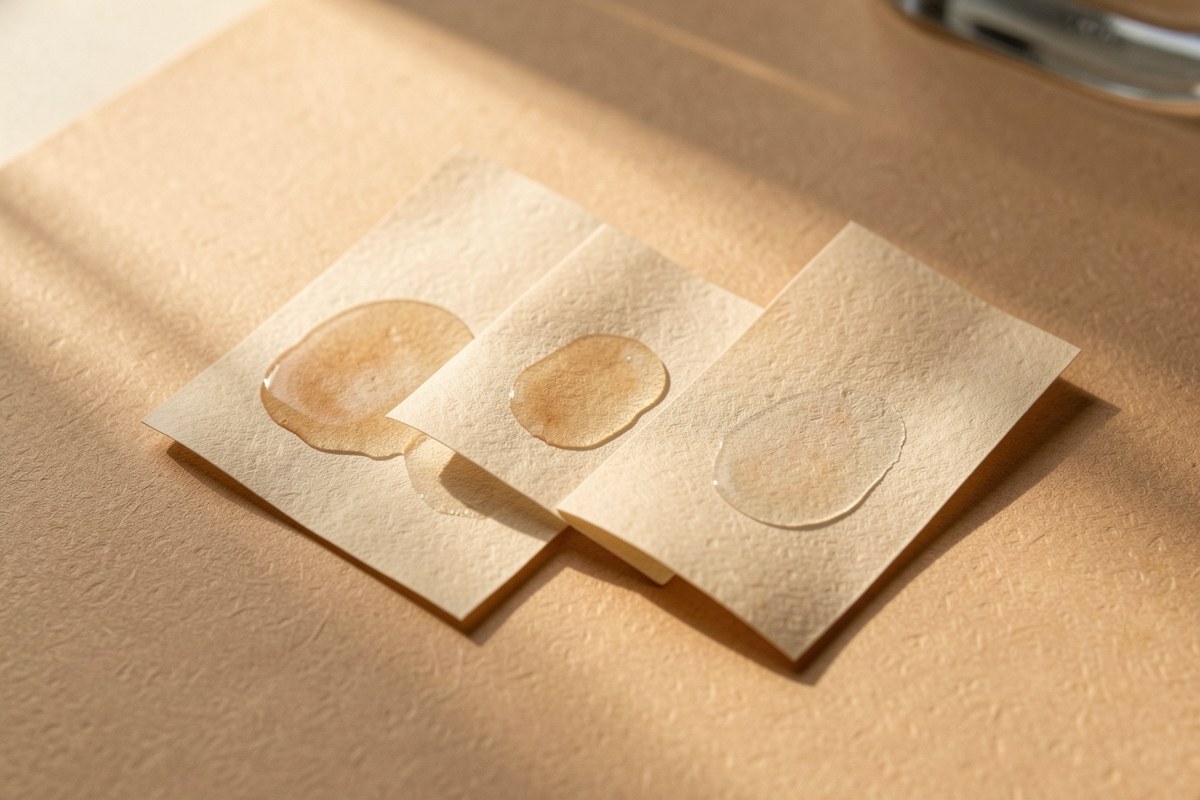
Top notes are the first impression of a perfume, the smells you notice immediately after spraying. They are built from the most volatile materials, which evaporate quickly from skin. Common top notes include citrus fruits such as bergamot, lemon and orange, along with light greens, herbs and airy fruits.
This volatility explains why a perfume's opening can feel bright and clean, then seem to disappear within a short time. Estimates for how long top notes last vary widely, from roughly fifteen minutes to about two hours, depending on the concentration, the amount applied, skin type and the surrounding environment.
Sources: Clive Christian Perfume, Malibu Apothecary, The Perfumer's Apprentice, Edens Garden, Azizun
Heart notes and the middle of the wear
Heart notes, also called middle notes, emerge as the top notes dissipate. They are often described as the core identity or main character of a fragrance, bridging the fresh opening and the deep base. On skin, heart notes become most noticeable once the perfume has settled, and they remain evident through much of the wear.
Florals, spices, fruits and green or herbal materials are common heart notes. You may see rose, jasmine, ylang-ylang, geranium, cardamom, cinnamon, nutmeg and lavender in this layer. Because heart notes define so much of a perfume's character, they often determine which fragrance family it belongs to, such as floral, oriental or woody.
Reported durations for the heart layer vary widely, from about twenty minutes to six to eight hours depending on the source and the concentration. This range reflects the same variables that affect all note layers: the materials used, how much perfume is applied and how it interacts with your skin.
Sources: Clive Christian Perfume, Malibu Apothecary, The Perfumer's Apprentice, Edens Garden, Shay & Blue, Near Store, Charlotte Tilbury
Base notes and the dry down
Base notes are the foundation of a fragrance and the last impression it leaves. They are made from heavier, slower-evaporating materials that become noticeable around thirty minutes after application and can persist for many hours. The dry down is the later stage of wear when these base notes remain after the top and heart layers have faded.
Woods such as sandalwood and cedarwood, resins, musks and sweet or gourmand materials like vanilla and tonka bean are typical base notes. They anchor the lighter notes and help extend the overall wear time of a perfume. Base-note durations reported in fragrance writing range from about six hours to twelve or more hours, again depending on concentration and skin.
Sources: Clive Christian Perfume, Malibu Apothecary, The Perfumer's Apprentice, Edens Garden, Azizun, Shay & Blue, Near Store, Charlotte Tilbury
Common example notes in each layer
The examples below are typical materials you may see listed in a note pyramid. They are not exhaustive, and individual perfumes may use a much longer or shorter list.
| Layer | Common example materials | Typical role |
|---|---|---|
| Top notes | Bergamot, lemon, orange, light greens, herbs, light fruits | Opening freshness; first impression |
| Heart notes | Rose, jasmine, ylang-ylang, geranium, cardamom, cinnamon, nutmeg, lavender | Core character; bridges top and base |
| Base notes | Sandalwood, cedarwood, patchouli, vetiver, amber, musk, tonka bean, vanilla | Depth and longevity; dry down |
Sources: Clive Christian Perfume, Malibu Apothecary, Edens Garden, Azizun, Shay & Blue, Near Store
Why note lists are not a formula
A note list describes impressions, not a recipe. Two perfumes can list the same rose or vanilla note and smell completely different because the materials, their quality, their proportions and the way they are blended all change the result. The pyramid is a classical convention rather than a requirement. Some fragrances, sometimes called linear, are built with only one or two layers and do not unfold in three distinct stages.
Sources: Malibu Apothecary, The Perfumer's Apprentice, Edens Garden, Shay & Blue, Charlotte Tilbury
How to smell a fragrance across its stages
To understand a perfume's full arc, sample it on skin rather than on paper. The opening top notes will be most obvious in the first minutes. Give the scent time to settle before judging it; heart notes become clearer as the opening fades, and base notes will not fully appear until roughly half an hour after application. If possible, wear the scent for several hours to experience the dry down.
Keep in mind that skin chemistry and concentration affect how quickly and how fully each stage unfolds. A more concentrated, more complex perfume may unravel more slowly. Durations vary because concentration, skin type and environment influence evaporation. This is also why a fragrance you liked in a shop can smell different at home: the first spray is only the beginning of the story.
The descriptions here reflect how fragrance brands and suppliers commonly explain note behaviour in their own guides. They are useful for reading a note pyramid and following a scent's development, but they are not a substitute for testing a perfume on your own skin.
Sources: Clive Christian Perfume, Malibu Apothecary, The Perfumer's Apprentice, Azizun, Shay & Blue
Frequently asked questions
Why does a perfume I liked in the shop smell different at home?
The version you tried in the shop was likely still in its opening or early heart phase, or it developed differently on your skin compared with the paper strip or the sales assistant's skin. Because a fragrance evolves from top notes through heart notes to base notes, what you smell in the first minutes is not the same as what you will smell hours later. Skin chemistry and the amount applied also affect how the stages unfold.
Sources: Clive Christian Perfume, Malibu Apothecary, Azizun, Shay & BlueHow long does the dry down take?
The dry down is the later stage of wear when the base notes remain after the top and heart layers have faded. Base notes typically become noticeable around thirty minutes after application, and the dry down can last from about six hours to twelve or more hours depending on the concentration of the perfume and your skin.
Sources: Malibu Apothecary, The Perfumer's Apprentice, Azizun, Shay & BlueDoes the note list tell me exactly what is inside?
No. A note list is a description of the impressions a fragrance is designed to give, not a full formula. Different materials, proportions and blending choices can produce very different results even when the same notes appear on the list. The note pyramid is also a convention rather than a requirement, and some fragrances do not follow the three-layer structure.
Sources: Clive Christian Perfume, The Perfumer's Apprentice, Edens Garden, Shay & BlueCan a base note appear immediately?
Base notes become noticeable around thirty minutes after application in typical wear. However, in a concentrated or simple composition, or on some skin types, heavier materials may be perceptible earlier. The order of the pyramid describes a general pattern, not a strict rule for every fragrance.
Sources: Malibu Apothecary, The Perfumer's Apprentice, Azizun, Shay & BlueSources
- Perfume Notes: What are the Top, Heart & Base Notes? - Clive Christian US – Clive Christian Perfume Limited — Clive Christian Perfume
- Understanding Fragrance Notes: Top, Heart, and Base Notes in Perfumery — Malibu Apothecary
- Perfume Notes — The Perfumer's Apprentice
- The Art of Perfume-Making: Understanding Top, Middle, and Base Notes — Edens Garden
- Fragrance Longevity: A Guide to Scent Notes and Perfume Oils — Azizun
- Top, Heart, Base - What Does It All Mean?! – Shay & Blue USA — Shay & Blue
- Perfume Notes | Guide to Perfume Fragrance Families — Near Store
- What Are Fragrance Notes? | Charlotte Tilbury — Charlotte Tilbury