What to prepare before you test
Testing perfume well starts before you touch a bottle. The goal is to give each fragrance a clean surface and a fair run, without interference from yesterday's scent or a scented lotion.
Come with clean, unscented skin. Applying a fragrance to clean, unscented skin avoids interference from other products such as scented lotion or deodorant. If your skin feels dry, an unscented moisturiser applied before spraying can support how a fragrance wears, because dry skin lets the scent evaporate faster. Treat that as a practical tip rather than a measured outcome.
Bring a few practical items: paper test strips if the shop provides them, a pen, and a notebook or phone notes app. A written log of each test, with date, weather, time readings and how the fragrance feels, is the way to avoid confusing one tested scent with another.
If you are testing in a fragrance shop, keep in mind that many open bottles and other people's perfume can fatigue your nose before you begin. Plan a short first pass and a longer at-home follow-up rather than trying to decide everything on the spot.
- Start with clean, unscented skin.
- Skip scented lotions, deodorant or hair products on the areas you plan to spray.
- Carry paper strips, a pen and somewhere to write.
- Plan for a shortlist session first, then a longer skin test later.
Sources: Parfinity, Zermat USA, VedaOils, Cork Niche Fragrances, CLEAN Beauty Collective
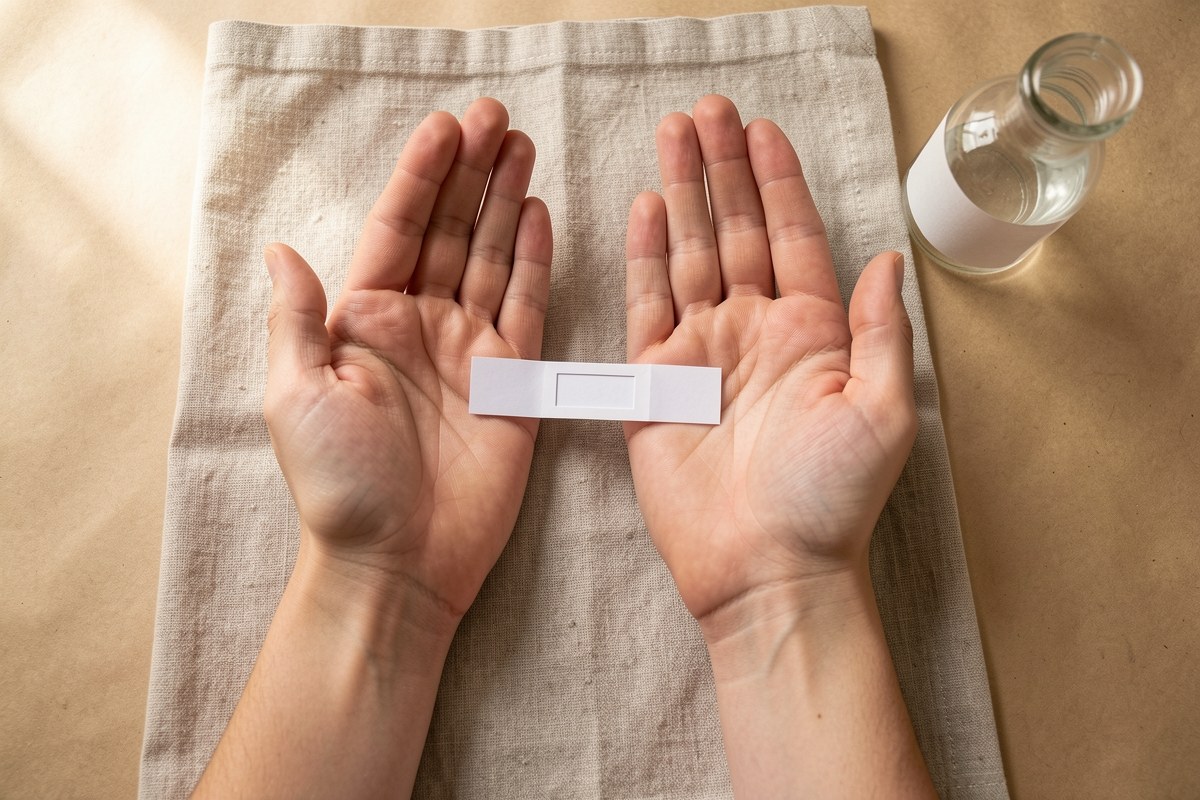
Testing on paper versus on skin
Paper blotters are useful for a first pass, not a final verdict. Paper blotters are used as a preliminary step to shortlist fragrances before testing a smaller number on skin. They let you smell several options quickly and decide which ones deserve a place on your arm.
Paper does not reproduce how a fragrance behaves on skin. A paper blotter lacks body temperature, skin pH, skin oils and the skin microbiome that shape the scent. It captures mainly the volatile opening and not the heart and base development.
That is why testing a fragrance only on a paper strip is a recognised testing mistake. Use the strip to decide what to put on skin, then do the real test on yourself.
The same fragrance can also develop differently on two people because of skin pH, hydration, body temperature and skin bacteria. A scent that smells one way on a friend can take a different path on you.
| Method | Best use | Main limitation | Session limit |
|---|---|---|---|
| Paper blotter or test strip | Fast preliminary shortlist of several fragrances without applying to skin | Does not reproduce body temperature, skin pH, skin oils or skin microbiome; shows mostly the opening | Roughly 4 to 5 strips per session |
| Skin test | Confirming how a shortlisted fragrance develops and lasts on you | Needs hours and uncontaminated skin; results depend on your pH, hydration, temperature and lifestyle | Roughly one or two fragrances per skin session, with a total cap of three or four fragrances |
Sources: Parfinity, Zermat USA, VedaOils, Cork Niche Fragrances, CLEAN Beauty Collective, Noteology
Where and how much to spray
For a fair skin test, spray once or twice on a pulse point such as the inner wrist. Keep the application small and consistent so you can compare fragrances on equal terms. Let the scent dry naturally instead of rubbing your wrists together.
Rubbing does not destroy the molecules, but it disturbs the intended development of the opening by accelerating top-note evaporation. If you want to understand how a fragrance unfolds, let it unfold on its own.
When you smell a paper strip, spray or dip it and wait about 30 seconds for the alcohol to flash off, then smell from a short distance. Smelling immediately after spraying mostly gives you alcohol, not the perfume.
If you plan to compare two or three scents, place them on separate spots. One scent per wrist is a common approach, but keep the total number of skin fragrances low so your nose and your notes stay manageable.
- Choose a pulse point, such as the inner wrist, for each fragrance.
- Spray once or twice and do not rub the skin.
- For a paper strip, wait about 30 seconds before smelling.
- Note the time you applied each scent so you can return to it at the same checkpoints.
Sources: Parfinity, VedaOils, CLEAN Beauty Collective, Noteology
Checkpoints at 15 minutes, 1 hour and 3 hours
A fragrance develops in stages. Top notes dominate the first 15 to 30 minutes, heart notes emerge during the following hours, and base notes can linger for many hours after application. The exact windows vary between sources, so treat any timeline as an approximate guide rather than a fixed cutoff.
Use three checkpoints to hear the full story. At about 15 minutes, you are mostly smelling the opening. This is the stage people often mistake for the whole fragrance. At about 1 hour, the heart notes are usually more visible. At about 3 hours, you are closer to the base and can judge how the scent sits on your skin over time.
A fragrance should be evaluated over several hours and, ideally, repeated on more than one day before a buying decision is made. One session tells you how a scent behaves today; a second session tells you whether you still like it tomorrow.
If you only have a short window, at least sample at the 15-minute and 1-hour marks. The 3-hour checkpoint is what separates a pleasant first impression from a scent you actually want to wear.
- 15 minutes: opening impressions, largely top notes.
- 1 hour: heart notes usually more apparent.
- 3 hours: base notes and overall wear on your skin.
- A second day of testing gives a more reliable decision.
Sources: Parfinity, Zermat USA, Cork Niche Fragrances, CLEAN Beauty Collective, Noteology
Recording what you smell at each stage
Notes are the difference between a fun afternoon and a useful test. Keep a written log of each test with the date, the weather, your time readings and how the fragrance feels. Write in plain language: sharp, soft, sweet, dry, warm, green, soapy, smoky. You do not need technical vocabulary to record an honest impression.
At each checkpoint, describe the scent in a few words and note anything that changed. Did the opening fade quickly? Did a note you liked disappear? Did the base feel heavier or lighter than expected? These observations matter more than a score, because you are tracking development, not just approval.
Also record where you applied the fragrance and what else was on your skin that day. That context helps you compare tests fairly later. If you want to learn the vocabulary for what you are smelling, our guide to perfume notes explains the common families and materials behind these impressions.
A sample or discovery set is a lower-cost way to run this kind of multi-day test before committing to a full bottle. It also lets you repeat a fragrance in different weather or at different times of day, which produces more relevant results than testing only in a shop.
- Date, weather and time of application.
- Where you sprayed and how much.
- A few descriptive words at 15 minutes, 1 hour and 3 hours.
- Anything you noticed on a second wearing.
Sources: Parfinity, Zermat USA, VedaOils, Cork Niche Fragrances, CLEAN Beauty Collective
How to compare two or three scents fairly
Olfactory fatigue limits how many fragrances you can evaluate in one session. Most guides cap a session at roughly three to four fragrances, though the exact count is a rule of thumb rather than a measured dose. Fewer scents per session usually means better notes.
If you are testing on skin, keep it to about one or two fragrances per skin session. Use paper strips for the wider shortlist, then bring only the strongest candidates onto your skin. This mirrors the way blotters are used before skin testing in perfumery practice.
When your nose feels saturated, coffee beans do not reliably reset the sense of smell. Stepping into fresh air or smelling your own unscented skin is presented as a more effective palate cleanser. This is practitioner guidance rather than laboratory evidence, but it is a reasonable habit during a long testing session.
Finally, test in conditions that match how you expect to wear the fragrance. Evening, indoor or cold-weather wear can give you more relevant results than a single shop visit. If you are still building your overall approach to buying, our fragrance shop basics page covers how to navigate a store visit without pressure.
- Shortlist on paper first.
- Choose no more than two or three finalists for skin.
- Test each finalist at the same checkpoints on the same day.
- Repeat your favourite on a second day before deciding.
Sources: Parfinity, Zermat USA, VedaOils, Cork Niche Fragrances, CLEAN Beauty Collective, Noteology
Frequently asked questions
Should I test more than one fragrance at a time?
You can, but keep the number low. Olfactory fatigue makes it hard to judge many scents in one session, and most guides cap a session at roughly three to four fragrances. If you are testing on skin, one or two fragrances per session is a practical limit. Use paper strips for the wider shortlist and save your skin for the finalists.
Sources: Parfinity, VedaOils, CLEAN Beauty CollectiveWhy does a perfume smell different on paper than on my skin?
Paper does not have body temperature, skin pH, skin oils or a skin microbiome, so it cannot reproduce how a fragrance behaves on you. A blotter mainly shows the opening notes, while skin reveals the heart and base over several hours. That is why paper is best used to shortlist and skin is used to confirm.
Sources: Parfinity, Zermat USA, Cork Niche FragrancesHow long should I wait before deciding?
Plan on several hours rather than minutes. A useful rhythm is to check at about 15 minutes, 1 hour and 3 hours, because top notes dominate early, heart notes emerge during the following hours, and base notes can linger much longer. Ideally, repeat the test on a second day before deciding, since a fragrance should be evaluated over several hours and more than one wearing.
Sources: Parfinity, Zermat USA, Cork Niche Fragrances, CLEAN Beauty Collective, NoteologyCan I return a fragrance I bought after testing it?
Return policies are set by each retailer, so check the specific shop's terms before you buy. A sample or discovery set is a lower-cost way to test a fragrance across multiple days before committing to a full bottle, which reduces the need to rely on returns. If you are unsure, ask the shop what its policy is at the time of purchase.
Sources: Cork Niche Fragrances, CLEAN Beauty CollectiveSources
- How to Test Perfume Before Buying: Skin, Samples and Time — Parfinity
- How to Test Perfume at Home and Find out if a Scent Really Sticks – Zermat USA — Zermat USA
- How to Test Perfume? A Simple Guide to Test, Smell & Decide – VedaOils — VedaOils
- How to Test Perfume Samples Correctly – Cork Niche Fragrances — Cork Niche Fragrances
- How to Test Perfume Before Buying: Tips & Best Practices – CLEAN Beauty Collective — CLEAN Beauty Collective
- Sniff or Spray: How to Properly Test Fragrances | Noteology — Noteology